
Master your nutrition with our comprehensive Vitamin A Calculator guide. Learn to convert International Units to mcg, understand Retinol Activity Equivalents (RAE), and optimize your daily intake for better health.
Vitamin A Calculator : Mastering Daily Intake & Conversions (100% Accurate) Master your nutrition with our comprehensive Vitamin A Calculator guide. Learn to convert International Units to mcg, understand Retinol Activity Equivalents (RAE), and optimize…
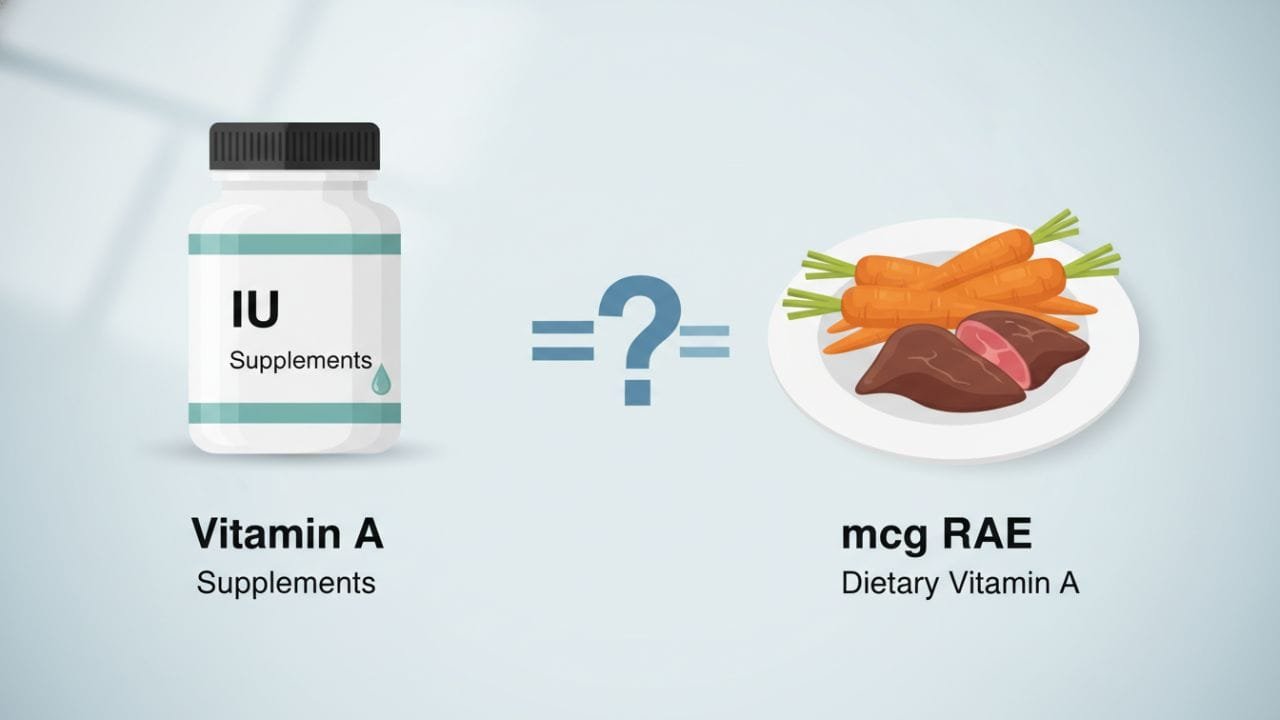
Vitamin A is one of the most misunderstood nutrients in the dietary world. Unlike Vitamin C or Calcium, which have straightforward measurements, Vitamin A is a complex family of compounds that behave differently in the human body. Whether you are looking at a nutrition label on a multivitamin or tracking your intake of sweet potatoes, the numbers can be confusing. You might see “International Units” (IU) on one package and “micrograms” (mcg) on another.
This guide serves as your ultimate resource for understanding these metrics. We will explore the mathematics behind the Vitamin A calculator concept, ensuring you get enough of this vital nutrient without exceeding safe limits. By the end of this article, you will understand how to balance your diet and supplements with precision.
Before diving into the math of a daily intake calculator, it is crucial to understand what we are calculating. Vitamin A is not a singular substance; it is a group of unsaturated nutritional organic compounds. These include retinol, retinal, and retinoic acid, along with several provitamin A carotenoids (most notably beta-carotene).
Vitamin A belongs to the class of fat-soluble vitamins. Unlike water-soluble vitamins (like B and C) that are flushed out of the body when consumed in excess, fat-soluble vitamins are stored in the liver and fatty tissues. This storage mechanism is a double-edged sword. It means you do not need to consume Vitamin A every single hour to stay healthy, but it also increases the risk of toxicity if you consistently overconsume high-potency supplements.
Because these vitamins require dietary fat for absorption, a Vitamin A calculator must often consider not just how much you eat, but what you eat it with. Consuming a carrot without fat results in very poor absorption, whereas eating it with olive oil drastically improves the nutrient uptake.
The most confusing aspect of Vitamin A is the unit of measurement. Historically, scientists used International Units (IU) to measure potency. However, updated nutritional science has shifted toward a more accurate metric known as Retinol Activity Equivalents (RAE). This shift occurred because 1 IU of retinol is biologically different from 1 IU of beta-carotene.
Retinol Activity Equivalents became the standard because they account for the body’s absorption efficiency. The body uses preformed Vitamin A (retinol) very easily. However, it has to work hard to convert plant-based pigments (carotenoids) into active Vitamin A. Therefore, you need to eat much more beta-carotene to get the same benefit as a smaller amount of retinol.
Converting International Units to mcg is the primary function of any robust Vitamin A calculator. The conversion rates are specific and depend entirely on the source of the vitamin. If you are looking at a supplement label, you need to know if the Vitamin A is from a synthetic source, a fish liver source, or a plant source.
Performing a manual RAE calculation helps you standardize your intake. For example, if a supplement label states it contains 5,000 IU of Vitamin A (as Beta-carotene), you cannot simply treat that as 5,000 units of active vitamin. You must do the math to see the actual biological value.
To assist with general unit conversions in your daily life, reliable tools like the Conversion Calculator can be incredibly useful for switching between metric and imperial systems before you apply specific vitamin formulas.
Bioavailability refers to the proportion of a nutrient that enters the circulation when introduced into the body and is able to have an active effect. In the context of Vitamin A, bioavailability is the defining factor for how much you actually need to eat.
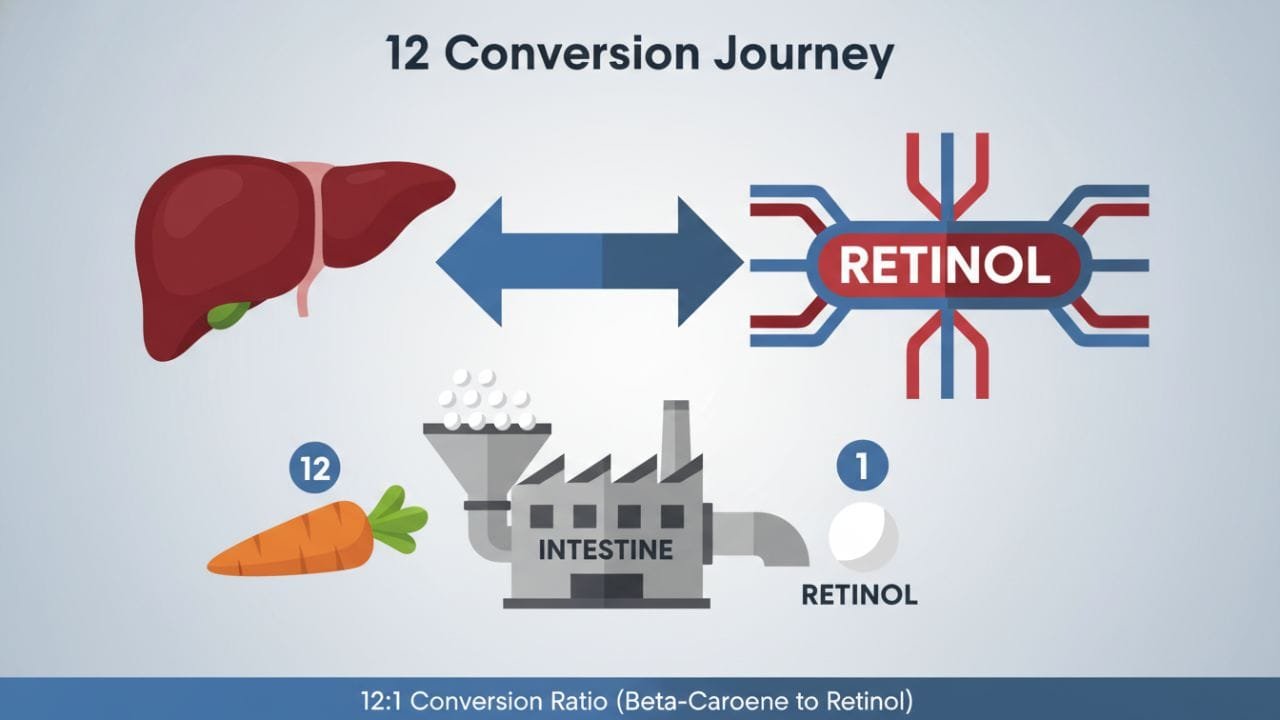
The bioavailability of vitamin A varies wildly between animal and plant sources. Preformed Vitamin A (retinol) found in animal products like eggs, dairy, and liver is highly bioavailable (70% to 90%). The body recognizes it immediately. In contrast, the bioavailability of carotenoids from colorful vegetables is much lower (often less than 5% to 65%) and depends on the food matrix (raw vs. cooked) and genetic factors of the individual.
The beta-carotene conversion ratio is generally accepted as 12:1. This means your body needs 12 micrograms of dietary beta-carotene to create just 1 microgram of active retinol. For other carotenoids like alpha-carotene, the ratio is even steeper at 24:1. This is why a vegetarian diet appears to be high in Vitamin A on paper (in IUs), but might be lower in actual RAE activity if digestion is compromised or fat intake is too low.
To maintain health without risking toxicity, health organizations have established specific guidelines. These numbers help you program your personal daily intake calculator.
The Dietary Reference Intakes are a set of reference values used to plan and assess nutrient intakes of healthy people. These values vary by age and gender. They are the benchmarks against which you should measure your diet.
The Recommended Dietary Allowance (RDA) is the average daily level of intake sufficient to meet the nutrient requirements of nearly all (97%-98%) healthy people. Meeting the RDA ensures you avoid deficiency symptoms like night blindness or immune system weakness.
| Life Stage | Age | Males (mcg RAE) | Females (mcg RAE) | Pregnancy (mcg RAE) | Lactation (mcg RAE) |
|---|---|---|---|---|---|
| Infants | 0–6 months | 400 (AI) | 400 (AI) | N/A | N/A |
| Infants | 7–12 months | 500 (AI) | 500 (AI) | N/A | N/A |
| Children | 1–3 years | 300 | 300 | N/A | N/A |
| Children | 4–8 years | 400 | 400 | N/A | N/A |
| Males/Females | 9–13 years | 600 | 600 | N/A | N/A |
| Adolescents | 14–18 years | 900 | 700 | 750 | 1,200 |
| Adults | 19+ years | 900 | 700 | 770 | 1,300 |
*AI = Adequate Intake (used when RDA cannot be established).
Achieving your RDA requires a mix of sources. Understanding the difference between food forms is critical for long-term health.
Vitamin A food sources are divided into two categories. Preformed Vitamin A comes from animal sources, while provitamin A comes from plants.
When you look at fortified foods (like breakfast cereals or skim milk) or multivitamins, you will often see retinyl palmitate or retinyl acetate listed. These are synthetic or isolated forms of preformed Vitamin A. They are highly stable and easily absorbed. Because they are preformed, they contribute directly to your total Vitamin A load and should be tracked carefully to avoid upper limit excesses.
Provitamin A carotenoids are the pigments that give fruits and vegetables their vibrant orange, yellow, and red colors. Beta-carotene is the most famous, but alpha-carotene and beta-cryptoxanthin are also common. The body regulates the conversion of these carotenoids. If you already have enough Vitamin A, the body simply stops converting them, making them a very safe source of the nutrient.
Now that we understand the variables, we can look at how to calculate your specific needs. Balancing your diet often requires checking your overall health metrics first. For instance, knowing your caloric needs via a BMR Calculator can help you understand how much food you should be eating in total, which influences your micronutrient intake.
To create a mental daily intake calculator, follow these steps:
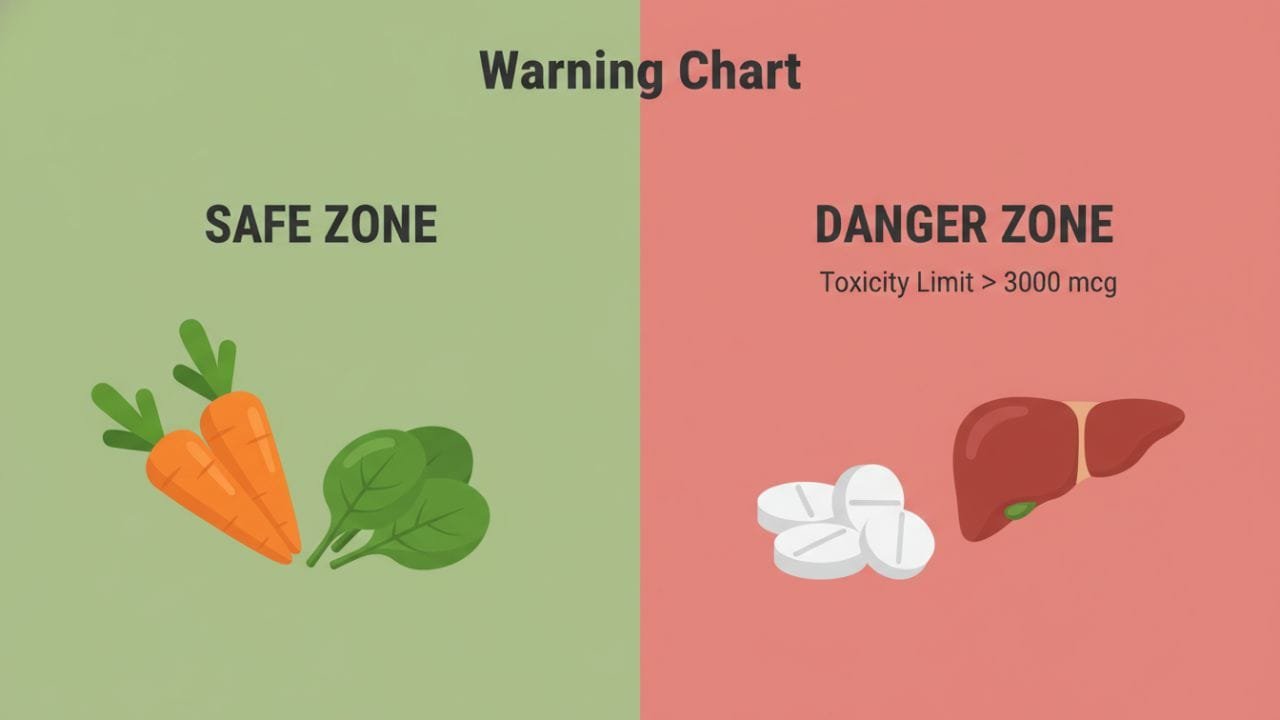
Using a supplement dosage tracker is vital for anyone taking multivitamins. Many people unknowingly double-dose by taking a multivitamin, a skin-health supplement, and a fish oil capsule, all of which may contain Vitamin A. You should list every supplement you take, calculate the RAE for each, and ensure the total does not exceed the Tolerable Upper Intake Level (UL), which is 3,000 mcg RAE for adults.
Vitamin A is a “Goldilocks” nutrient—too little is dangerous, and too much is dangerous. The goal is to get it just right.
Nutritional deficiency in Vitamin A is a leading cause of preventable blindness in children worldwide. Early signs include nyctalopia (night blindness), where the eyes struggle to adjust to low light. Chronic deficiency can lead to immune system collapse, making the body susceptible to common infections. Skin issues, such as hyperkeratosis (goosebump-like skin), are also common indicators.
On the other end of the spectrum is the hypervitaminosis A risk. This is toxicity caused by too much preformed Vitamin A (retinol). It can be acute (from a massive single dose, like eating polar bear liver) or chronic (from long-term high-dose supplements).
Symptoms include dizziness, nausea, headaches, skin irritation, pain in joints and bones, and in severe cases, liver damage. It is important to note that you cannot get hypervitaminosis A from eating too many vegetables (carotenoids); your skin might turn orange (carotenemia), but it is not toxic. For those monitoring overall health metrics alongside vitamin intake, using a tool like the Lean Body Mass Calculator can help track physical changes if you are adjusting your diet for fitness goals.
| Source Type | 1 IU equals… | Example: 5,000 IU provides… |
|---|---|---|
| Retinol (Animal/Synthetic) | 0.3 mcg RAE | 1,500 mcg RAE |
| Beta-carotene (Supplement in Oil) | 0.15 mcg RAE | 750 mcg RAE |
| Beta-carotene (Dietary Food) | 0.05 mcg RAE | 250 mcg RAE |
| Alpha-carotene (Dietary Food) | 0.025 mcg RAE | 125 mcg RAE |
Mastering the use of a Vitamin A calculator is about more than just crunching numbers; it is about understanding the source and quality of your nutrition. By distinguishing between retinol activity equivalents and International Units, and recognizing the difference between a steak and a sweet potato, you empower yourself to make smarter dietary choices.
Remember that while deficiencies are a global concern, modern supplementation requires a careful eye to avoid toxicity. Use the conversion tables provided, check your labels for retinyl palmitate versus provitamin A carotenoids, and aim for a balanced diet rich in whole foods. With this knowledge, you can navigate the complex world of nutrition with confidence and precision.
For further reading and verification of the technical terms used in this article, please refer to the following authoritative sources: