
Unlock your body's potential with our comprehensive guide to using a macro calculator. Learn how to optimize protein, carbs, and fats for weight loss and muscle gain.
The Ultimate Macro Calculator Guide: Master Your Nutrition in 7 Steps Unlock your body’s potential with our comprehensive guide to using a macro calculator. Learn how to optimize protein, carbs, and fats for weight loss…
Unlock your body’s potential with our comprehensive guide to using a macro calculator. Learn how to optimize protein, carbs, and fats for weight loss and muscle gain.
Nutrition can often feel like a complex puzzle. With so many diet trends, conflicting advice, and scientific terms thrown around, it is easy to feel overwhelmed. However, the secret to achieving your dream physique and optimal health often comes down to one mathematical concept: macronutrients. Understanding how to use a macro calculator effectively is the bridge between guessing what to eat and knowing exactly what your body needs to thrive.
Whether you want to lose body fat, build strength, or simply maintain a healthy lifestyle, looking beyond simple calorie counting is essential. By focusing on the specific nutrients that make up those calories, you can fuel your body more efficiently. This guide will walk you through the science of macronutrients, how to calculate your personal needs, and how to apply this knowledge to your daily life.
Before diving into the numbers, we must understand the building blocks of our diet. Nutrition tracking is the practice of logging what you eat to ensure you meet your body’s energy demands. While many people track calories, a more advanced and effective method involves tracking macronutrients, commonly known as “macros.”
Macronutrients are the nutrients your body needs in large amounts to function. There are three main types:
Each of these macros provides a specific amount of energy per gram. Protein and carbohydrates both provide 4 calories per gram, while fats provide 9 calories per gram. By manipulating the ratio of these nutrients, you can change your body composition—the ratio of fat mass to lean muscle tissue—much more effectively than by calorie restriction alone.
A macro calculator is a tool—or a formula—used to determine the exact amount of protein, carbohydrates, and fats you should consume daily to reach a specific goal. Unlike a generic diet plan, a calculator takes your unique statistics into account. Your age, gender, height, weight, and activity level all play a massive role in determining your nutritional needs.
Using a calculator provides a roadmap. It removes the emotion from eating. Instead of feeling guilty about food, you view it as data. This objective approach is often the key to long-term success in weight management.
You may have heard that weight loss is simply “calories in vs. calories out.” While this is scientifically true regarding scale weight, it does not tell the whole story. You can lose weight eating only sugary snacks if you stay in a calorie deficit, but you will likely lose muscle mass and feel terrible. This is often referred to as being “skinny fat.”
By focusing on macros, you ensure that the weight you lose comes primarily from fat stores, while the weight you keep (or gain) is muscle mass. This improves your metabolism and gives you the toned, fit look most people desire.
The first step in any nutritional calculation is finding your Basal Metabolic Rate (BMR). Your BMR represents the number of calories your body burns while at complete rest. Think of this as the energy required to keep your heart beating, your lungs breathing, and your brain functioning if you stayed in bed all day.
BMR accounts for the majority of the calories you burn daily—often between 60% and 75%. Calculating this number accurately is crucial because it serves as the foundation for all other calculations. If you underestimate your BMR, you might not eat enough to support basic biological functions. If you overestimate it, you might not lose weight.
For a precise starting point, you can use tools like the BMR Calculator at Omni Calculator, which uses the Harris-Benedict equation to give you a reliable baseline.
Once you have your BMR, you need to account for movement. We do not stay in bed all day; we walk, work, exercise, and fidget. All of these activities burn energy. This total number is called your Total Daily Energy Expenditure (TDEE).
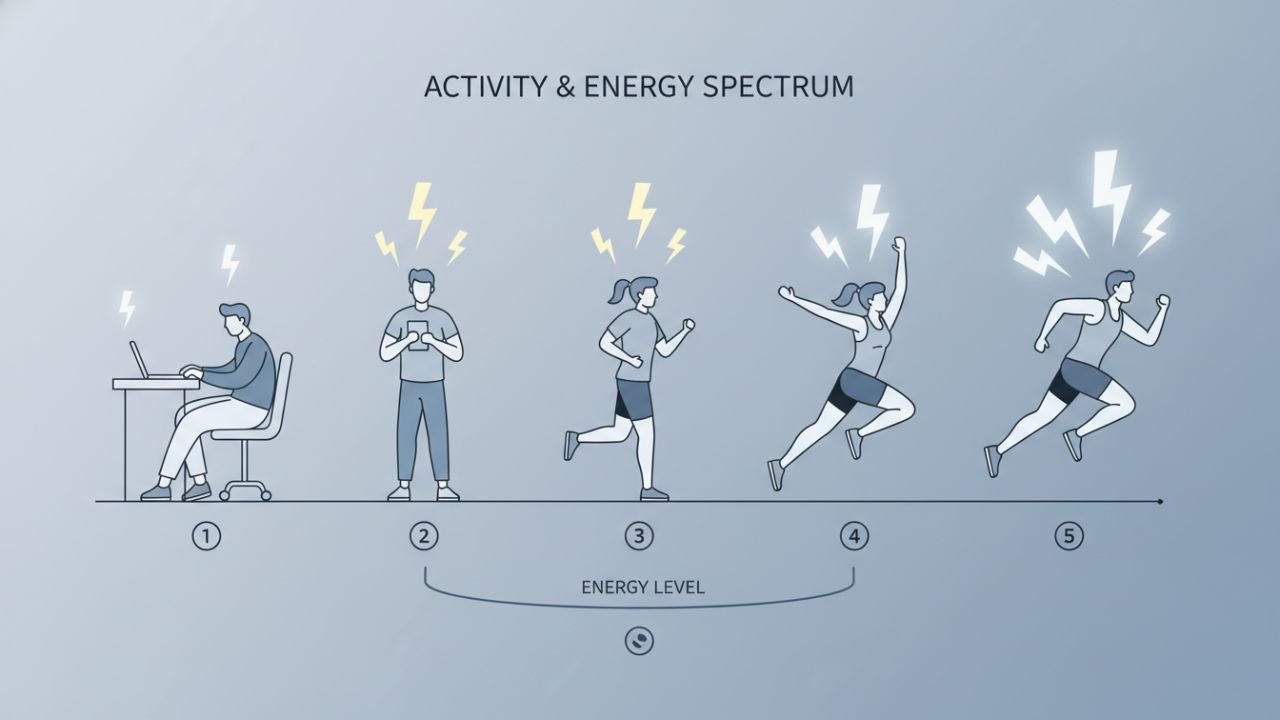
Your energy expenditure varies greatly depending on your lifestyle. A construction worker who lifts weights after work will have a much higher TDEE than an office worker who is sedentary. To find your TDEE, you multiply your BMR by an activity factor.
| Activity Level | Description | Multiplier |
|---|---|---|
| Sedentary | Desk job, little to no exercise | 1.2 |
| Lightly Active | Light exercise 1-3 days/week | 1.375 |
| Moderately Active | Moderate exercise 3-5 days/week | 1.55 |
| Very Active | Hard exercise 6-7 days/week | 1.725 |
| Extra Active | Very hard exercise & physical job | 1.9 |
It is important to be honest with yourself here. Most people overestimate their activity levels. If you are unsure, it is usually safer to pick the lower category to avoid overeating. For a more granular look at how specific exercises impact your burn, check out the Calories Burned Calculator to see how your gym sessions contribute to your total.
Now that you know your TDEE (your maintenance calories), you must adjust this number based on your goals. This becomes your daily calorie goal.
Once you have this target calorie number, you are ready to split it into macronutrients.
When calculating your macro split, always start with protein intake. Protein is the most critical nutrient for preserving lean tissue, especially when you are dieting. If you do not eat enough protein while in a calorie deficit, your body may break down muscle for energy, which slows down your metabolism.
A general rule of thumb for active individuals is to consume between 0.8 to 1.2 grams of protein per pound of body weight (or roughly 1.8 to 2.2 grams per kilogram). If you are very overweight, it is better to calculate this based on your goal weight or lean body mass rather than your total current weight.
High protein diets also have a high “thermic effect,” meaning your body burns more calories digesting protein than it does digesting fats or carbs. This gives you a slight metabolic advantage.
Carbohydrates are often demonized, but they are the body’s preferred fuel source for high-intensity activity. Your carbohydrate ratio will depend largely on how active you are. Endurance athletes and bodybuilders need significant carbs to replenish glycogen stores in their muscles.
However, if you are sedentary or have insulin resistance, you might benefit from a lower carbohydrate intake. There is no “one size fits all” here. For a balanced diet, carbohydrates typically make up 35% to 50% of total daily calories. If you are following a specific protocol like Keto, this number drops significantly. You can experiment with different splits using the Keto Calculator to see how drastic changes in carb ratios affect your fat allowance.
The remaining calories in your budget are allocated to fats. Calculating fat grams is crucial because dietary fat is essential for absorbing vitamins A, D, E, and K, and for regulating hormones like testosterone and estrogen. Going too low on fat (usually below 15-20% of total calories) can be dangerous for your health.
To calculate this, you subtract the calories from protein and carbs from your Daily Calorie Goal. The remaining number is divided by 9 (since fat has 9 calories per gram) to give you your daily fat gram allowance.
One of the most popular philosophies associated with macro counting is IIFYM, which stands for “If It Fits Your Macros.” This concept revolutionized the fitness industry. The core idea is that you can eat any food you like—pizza, ice cream, burgers—as long as the total numbers for the day match your protein, carb, and fat targets.
This approach is also known as flexible dieting. It moves away from the rigid idea of “clean” vs. “dirty” foods. While food quality still matters for vitamins, minerals, and fiber, IIFYM suggests that for body composition, the numbers are king. This flexibility prevents binge eating because no food is strictly off-limits. It makes the diet sustainable for months or years, rather than just weeks.
Nutrient distribution refers to how you divide your macros throughout the day. While total daily intake is the most important factor, timing can play a role in performance and hunger management.
For example, consuming the majority of your carbohydrates around your workout window (before and after training) can improve your energy during the session and recovery afterward. Spreading protein intake evenly across 4-5 meals helps keep muscle protein synthesis elevated throughout the day.
| Goal | Protein (%) | Fats (%) | Carbs (%) |
|---|---|---|---|
| Standard Balanced | 30% | 30% | 40% |
| Low Carb / Fat Loss | 40% | 40% | 20% |
| Endurance Athlete | 20% | 25% | 55% |
| Bodybuilding (Bulking) | 30% | 20% | 50% |
Even with the best tools, human error can derail progress. One common mistake is failing to track everything. Small bites, licks, and tastes of food while cooking can add up to hundreds of untracked calories. Another error is relying on database entries in tracking apps that are user-generated and incorrect. Always verify nutrition labels.
Furthermore, people often neglect fiber. While tracking macros, ensure you are getting at least 25-30 grams of fiber daily to support digestion and satiety.
Your macro calculation is not a permanent number. As you lose weight, your body becomes smaller and requires less energy to move. This means your BMR and TDEE will drop. This is often why weight loss plateaus occur.
To continue making progress, you must recalculate your macros every 5 to 10 pounds of weight change. Similarly, if you are bulking and gain muscle, your body will need even more fuel to sustain that new tissue. Regular adjustments are a normal part of the process.
Mastering the use of a macro calculator is one of the most empowering steps you can take in your fitness journey. It transforms the vague goal of “eating healthy” into a precise, actionable plan tailored to your physiology. By understanding concepts like TDEE, protein intake, and flexible dieting, you gain the freedom to enjoy food while still progressing toward your goals.
Remember, the calculator provides a starting point. Your body is dynamic, and your needs will change. Listen to your body, track your data, and adjust as needed. With patience and consistency, the math will work in your favor.
To ensure deep understanding and accuracy, the following technical terms used in this article are defined below with links to authoritative sources.