

Vitamin D Calculator: The Ultimate Guide to 10 Optimal Health Strategies
Vitamin D is often referred to as the “sunshine vitamin,” yet it functions more like a hormone than a traditional vitamin. It plays a pivotal role in regulating calcium absorption, supporting immune function, and maintaining bone integrity. Despite its importance, a staggering number of people globally suffer from low levels. This is where a precision Vitamin D calculator becomes an essential tool for personal health management.
Calculating the correct dosage is not a matter of guessing. It requires a mathematical approach that considers your current blood levels, your body weight, your skin type, and your exposure to the sun. By understanding the variables that go into these calculations, you can safely navigate the path from deficiency to sufficiency.
Understanding Vitamin D Deficiency
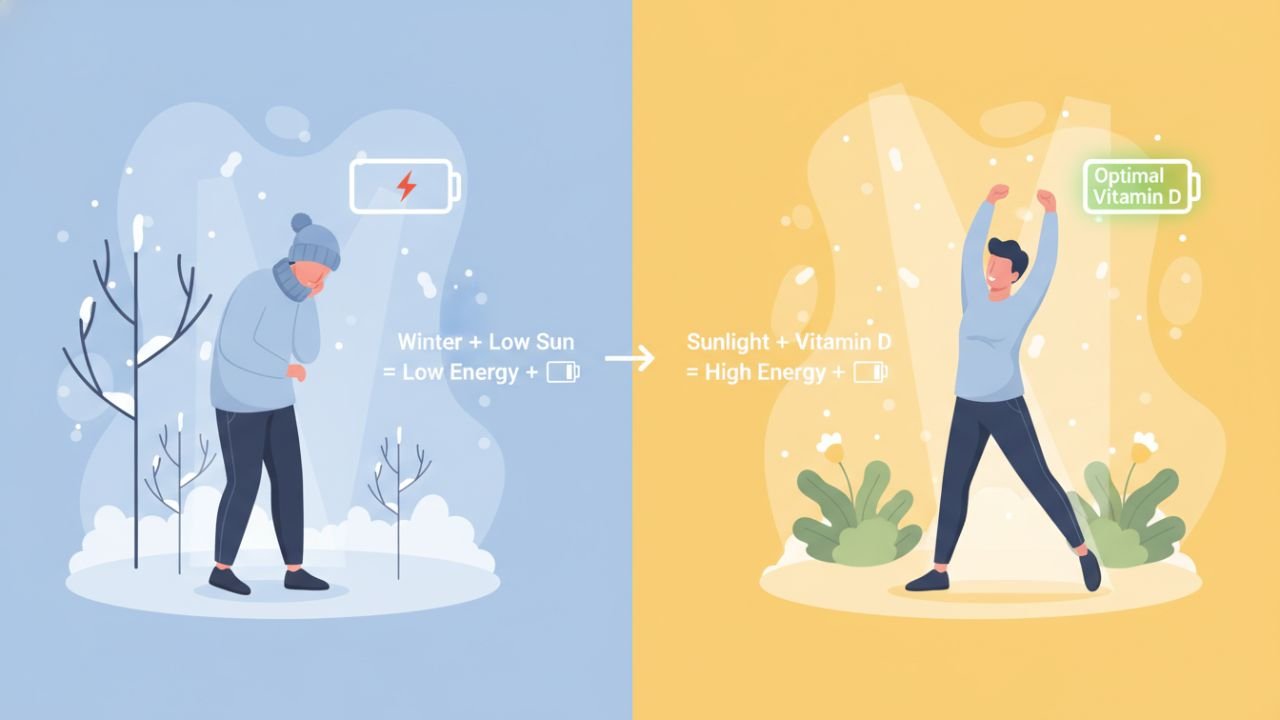
Vitamin D deficiency is a silent epidemic. Unlike other nutrient deficiencies that might show immediate physical symptoms, low Vitamin D levels often manifest subtly. You might experience fatigue, vague bone pain, muscle weakness, or frequent infections. Over time, chronic deficiency can lead to severe conditions such as osteoporosis in adults and rickets in children.
The challenge with deficiency is that it is highly individual. Two people can eat the same diet and live in the same city, yet one may have optimal levels while the other is severely deficient. This discrepancy is why a standardized “one-size-fits-all” dosage recommendation often fails to correct the problem. To address this, we must look at the specific metrics that define deficiency.
How a Vitamin D Calculator Works
A robust Vitamin D calculator is an algorithmic tool designed to estimate the loading dose (the amount needed to raise levels) and the maintenance dose (the amount needed to keep levels steady). It processes several physiological and environmental inputs to output a recommendation usually measured in International Units (IU).
For those looking to crunch the numbers immediately, the Vitamin D Calculator provides a comprehensive interface to estimate your needs based on the medical standards we will discuss below.
Interpreting Serum 25(OH)D Levels
The gold standard for measuring your status is the serum 25(OH)D levels test. This blood test measures 25-hydroxyvitamin D, the major circulating form of the vitamin. When you receive your blood test results, the numbers will be presented in one of two units: nanograms per milliliter (ng/mL) or nanomoles per liter (nmol/L).
Understanding the conversion between these two units is critical for using any calculator correctly. The conversion factor is 2.5. Therefore, 20 ng/mL is equivalent to 50 nmol/L. Without knowing your starting point, it is impossible to calculate the trajectory to your goal.
The Role of IU Measurement
Vitamin D supplements are quantified using IU measurement (International Units). Unlike milligrams or grams, IUs measure the biological activity of a substance. For Vitamin D, 40 IU is roughly equivalent to 1 microgram (mcg).
When using a calculator, you will input your target level. The algorithm then calculates the total IU deficit. For example, a general rule of thumb used by some clinicians is that 100 IU of Vitamin D3 daily will raise serum levels by approximately 1 ng/mL after 3 to 4 months. However, this is a simplified estimate that is heavily influenced by body mass.
Factors Influencing Your Daily Requirement
Your daily requirement is not static. It fluctuates based on biology and lifestyle. A calculator essentially applies “weighting” to these variables to adjust the final dosage recommendation.
Body Mass Index and Weight
There is an inverse relationship between body mass index (BMI) and serum Vitamin D levels. Vitamin D is fat-soluble, meaning it gets sequestered (stored) in adipose tissue (body fat). Individuals with a higher percentage of body fat require significantly higher doses to achieve the same increase in blood levels as someone with a lower body fat percentage.
If you are overweight or obese, the calculator must adjust the dosage upward. Some studies suggest that individuals with a BMI over 30 may need two to three times the dosage of someone with a BMI of 25 to achieve the same result. To understand where you stand, checking your stats with a BMI Calculator can be a helpful first step in determining your dosage category.
Skin Pigmentation and Melanin
Skin pigmentation is a natural sunscreen. Melanin, the pigment that gives skin its color, absorbs UV radiation and protects the skin from damage. However, it also reduces the skin’s ability to synthesize Vitamin D from sunlight.
Individuals with darker skin types (Fitzpatrick scale types IV, V, and VI) have more melanin and therefore require much longer sun exposure to produce the same amount of Vitamin D as someone with pale skin. A calculator that does not account for skin type may underestimate the dosage needed for people of color.
Sunlight Duration and Geography
Sunlight duration and intensity are the primary natural drivers of Vitamin D synthesis. However, this is dependent on the angle of the sun. In winter months, specifically in latitudes above 37 degrees north or below 37 degrees south, the sun never gets high enough in the sky for UVB rays to penetrate the atmosphere effectively.
During these “Vitamin D winters,” no amount of time outside will result in production. During summer, the time of day matters. The “shadow rule” applies: if your shadow is longer than you are tall, you are not making significant Vitamin D.

Determining Your Vitamin D Dosage
Once the variables are assessed, we move to the practical application: determining the specific Vitamin D dosage. This involves choosing the right type of supplement and understanding the timeline.
Cholecalciferol Supplementation vs. Ergocalciferol
There are two main forms of Vitamin D supplements: Vitamin D2 (ergocalciferol) and Vitamin D3 (cholecalciferol). Cholecalciferol supplementation is widely regarded as superior for raising serum levels. Vitamin D3 is the form naturally produced by animals and humans, whereas D2 is derived from plants and fungi.
Research indicates that D3 is more effective at sustaining elevated blood levels over the long term. When using a calculator or purchasing supplements, always verify that the source is cholecalciferol to ensure you are getting the most bioavailable form.
Calculating Vitamin D3 Intake
To calculate your specific Vitamin D3 intake, you must define the gap between your current level and your target.
Formula Concept:
(Target Level – Current Level) x Body Weight Factor = Total Loading Dose.
This total loading dose is usually spread out over several weeks to avoid toxicity, although true toxicity is rare. For example, if you need a total of 300,000 IU to reach sufficiency, you might take 5,000 IU daily for 60 days.
Optimal Vitamin D Levels for Maximum Health Benefits
What is the goal? Optimal vitamin D levels are a subject of debate, but functional medicine practitioners and the Endocrine Society generally agree that “sufficient” is different from “optimal.”
While 20 ng/mL might prevent rickets, it is likely insufficient for the full range of health benefits, which include cancer prevention, improved mood regulation, and enhanced athletic performance. Many experts advocate for levels between 40 and 60 ng/mL.
| Status | Serum Level (ng/mL) | Serum Level (nmol/L) | Health Implications |
|---|---|---|---|
| Deficient | < 20 | < 50 | Risk of rickets, osteomalacia, and weak immune system. |
| Insufficient | 20 – 29 | 50 – 74 | Suboptimal bone health, potential parathyroid hormone increase. |
| Sufficient | 30 – 39 | 75 – 99 | Adequate for bone health and basic metabolic function. |
| Optimal | 40 – 60 | 100 – 150 | Peak immune function, reduced inflammation, athletic recovery. |
| Excess | > 100 | > 250 | Potential for toxicity (Hypercalcemia). |
Maintenance Dosage vs. Loading Dose
Once you have achieved your optimal level, you cannot simply stop taking the vitamin. You must switch to a maintenance dosage. This is the daily amount required to counteract the natural half-life of Vitamin D in the body.
Without a maintenance dose, levels will slowly decline, especially during winter months or periods of low UV exposure. A typical maintenance dose ranges from 1,000 to 2,000 IU per day, but this again depends on body weight and lifestyle.
The Impact of UV Exposure and Safety
While supplements are precise, the sun is the most natural source. UV exposure triggers the synthesis of Vitamin D in the skin. However, balancing production with skin safety is vital.
You do not need to burn to produce Vitamin D. In fact, once the skin turns slightly pink (erythema), production halts and degradation begins. Short, frequent exposures are safer and more effective than long sessions. For those concerned about balancing sun time with skin safety, the Sun Exposure Calculator can help estimate safe durations based on the UV index in your area.

Detailed Dosage Recommendations
Below is a breakdown of estimated dosages required to correct deficiency. Note that these are estimates and should be verified with a healthcare provider.
| Current Level (ng/mL) | Adult Weight: 110 lbs (50 kg) | Adult Weight: 155 lbs (70 kg) | Adult Weight: 200 lbs (90 kg) |
|---|---|---|---|
| < 10 (Severe) | 4,000 IU/day | 6,000 IU/day | 8,000 IU/day |
| 10 – 20 (Deficient) | 3,000 IU/day | 5,000 IU/day | 7,000 IU/day |
| 20 – 30 (Insufficient) | 2,000 IU/day | 3,000 IU/day | 5,000 IU/day |
Conclusion: Taking Charge of Your Health
Navigating the world of vitamins and hormones can be complex, but the tools available today make it easier than ever to take control. By utilizing a Vitamin D calculator, understanding the nuances of cholecalciferol supplementation, and monitoring your serum 25(OH)D levels, you can ensure your body has the resources it needs to thrive.
Remember, optimal health is not an accident; it is the result of informed decisions and consistent action. Whether through safe sun exposure or precise supplementation, correcting a Vitamin D deficiency is one of the most impactful steps you can take for your long-term well-being.
Technical Resources & References
The following technical terms used in this article are defined below with links to authoritative sources.
- Cholecalciferol: Also known as Vitamin D3, this is a steroid hormone produced in the skin when exposed to ultraviolet light or obtained from dietary sources.
- 25-Hydroxyvitamin D: The major circulating form of vitamin D in the blood, which is the best indicator of vitamin D supply to the body from cutaneous synthesis and nutritional intake.
- Hypercalcemia: A condition in which the calcium level in your blood is above normal. Too much calcium in your blood can weaken your bones, create kidney stones, and interfere with how your heart and brain work.
- Fitzpatrick Scale: A numerical classification schema for human skin color. It is used to estimate the response of different types of skin to ultraviolet (UV) light.
- Parathyroid Hormone (PTH): A hormone secreted by the parathyroid glands that is important in bone remodeling. High levels of PTH can be a sign of Vitamin D deficiency.